Edible, medicinal, and native plants for the Pacific Northwest
We spent 13 years building an abundant fruit forest, annual veggie beds, perennial medicinal herbs, and a healthy mixed hardwood-coniferous forest and now we’ve sold our property to the next stewards so that we can begin a new homesteading project in Vermont closer to our best friends and their kids.
Don’t worry - we plan to keep this website up and running so that our customers can reference what we’ve written about our plants!
We’ll let you know once we re-start a farm in Vermont!
Mugwort
Mugwort belongs to the genus Artemisia, named after the Greek goddess Artemis - the goddess of the moon, the hunt, wild animals, and childbirth. At the same time that mugwort is a cooling, anti-inflammatory, and bitter herb, it is also used to invoke Artemis and all she represents. While mystical herbalists know that mugwort brings vivid dreams to those who drink the tea or keep a bundle under their pillow, modern scientists have also confirmed that it interrupts deep sleep in favor of REM sleep in which dreams are made.
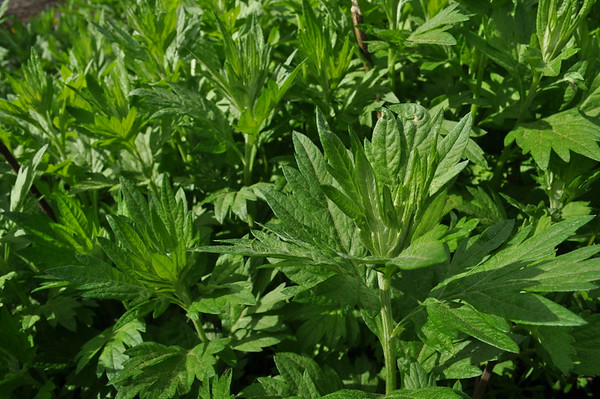
This is the official mugwort native to temperate Europe, Asia, and north Africa often referenced in witches spells and potions. It is a very strong cooling bitter that I like to use in apple cider vinegar as an anti-inflammatory liniment for poison oak or other irritated rashes.
In the garden, either give this plant plenty of space to make a thick stand of dense, spreading six-foot-tall stems, or plant it in a pot. Read more
Douglas mugwort is my favorite of the species of Artemisia that we grow. It is native to sunny streambanks and partly shady riparian areas of several western states from Oregon to Mexico. It has wide leaves like common mugwort, a short stature like western mugwort. It won’t quickly overpower its garden neighbors the way common mugwort will! It’s not as drought tolerant as western mugwort, but it can handle heavy clay soil more easily. Read more
Native to Oregon and much of North America, western mugwort is a rhizomatous perennial with beautiful gray-green foliage composed of long, strap-like leaves. Its yellow-white flowers bloom in summer. Much less agressive than the european mugwort (A. vulgaris), this plant prefers very well-drained soil and full sun. It has medicinal properties similar to other mugwort species. Read more