Edible, medicinal, and native plants for the Pacific Northwest
We spent 13 years building an abundant fruit forest, annual veggie beds, perennial medicinal herbs, and a healthy mixed hardwood-coniferous forest and now we’ve sold our property to the next stewards so that we can begin a new homesteading project in Vermont closer to our best friends and their kids.
Don’t worry - we plan to keep this website up and running so that our customers can reference what we’ve written about our plants!
We’ll let you know once we re-start a farm in Vermont!
Thyme
Who couldn’t use more thyme in their day? The foliage and flowers make tea that not only tastes great, but also has all of the healing properties of thyme oil: antibacterial, carminative, soothing on the stomach, and eases congestion in the sinuses and lungs. Thyme thrives especially when you pinch the growing tips to make it more shrubby and branched so that it can form a miniature hedge. It grows best with nearly full sun, though some varieties can tolerate some shade. Although rich soil is best, thyme will also grow in poor soil as long as it has good drainage.
After 3-4 years, the lower stems of thyme plants can often get very woody and the whole plant will grow more slowly unless it’s in full sun with rich moist soil. If your plant is woody and not growing very quickly, you might try burying the lower stems with a nice rich compost so that the upper shoots stick out of the top. The upper stems will send out new roots into the fluffy and fertile layer of compost, reinvigorating the plant.
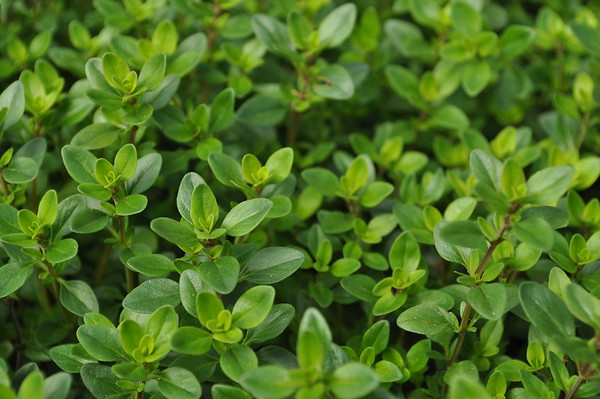
Orange scented fragrant thyme has a compact growth form with small leaves more similar to French thyme and German winter thyme than any of the other varieties. What sets it apart is the scent - spicy sweet oranges - wow! Read more
English Tabor thyme has wide leaves that are the most broad, green, and juicy of any thyme we’ve grown. Whereas other varieties are often quite spicy and pungent, this thyme is mild tasting but still has the herbal aromatic qualities that all thyme varieties share. Although all thyme varieties like sun and well-drained soil, this one is relatively tolerant of part shade and moist soil. Remind you of England? Read more
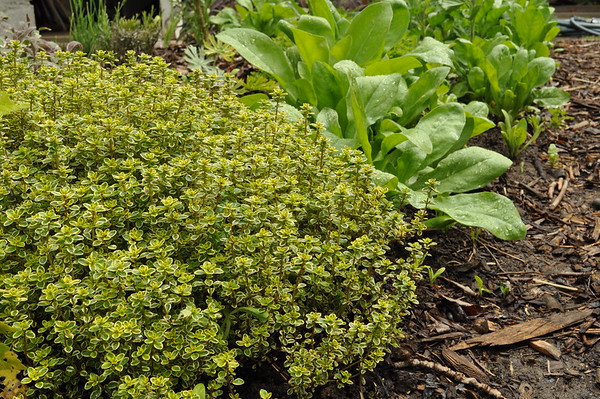
Beautiful, culinary, medicinal - no herb garden is complete without this variegated, lemon scented thyme. The yellow and green leaves give way to pink flowers in summer. This thyme forms a short hedge 6 inches to a foot tall. Read more
Combining the warm, spicy scent of thyme with the sweet aroma of old-fashioned rose, we can’t seem to grow enough of this wonderful herb! The foliage and flowers make tea that not only tastes great, but also has all of the healing properties of thyme oil: antibacterial, carminative, soothing on the stomach, and eases congestion in the sinuses and lungs.
We dry and jar up every bit that we don’t sell so that we can enjoy this delightful, relaxing, and medicinal tea. In fact, we could use some more in the pantry… wait a second… you don’t really want to grow this plant after all, do you? I mean, we get to keep all the plants if you don’t buy them, right?!? Well, gosh, I think we’re sold out for now. Heehee… OK, OK, just kidding - we might just have some left if you ask nicely! :^) Read more
This is a lemon thyme that is variegated with slivery grey-green foliage. It makes a very nice contract interplanted with lemon variegated thyme. Read more