Edible, medicinal, and native plants for the Pacific Northwest
We spent 13 years building an abundant fruit forest, annual veggie beds, perennial medicinal herbs, and a healthy mixed hardwood-coniferous forest and now we’ve sold our property to the next stewards so that we can begin a new homesteading project in Vermont closer to our best friends and their kids.
Don’t worry - we plan to keep this website up and running so that our customers can reference what we’ve written about our plants!
We’ll let you know once we re-start a farm in Vermont!
Angelica
There are several species of Angelica that grow well here in the Willamette Valley including garden angelica, dong quai, pubescent angelica (du huo), and dahurican angelica (bai zhi). They are all warming and bitter carminative and digestive aids, and some have additional actions on the lymphatic system and the reproductive system. Although garden angelica (A. archangelica) is the largest and most mild flavored of them all, it is the only species we grow that is monocarpic. That is, once it goes to seed, it dies. The other species are all perennials.
Dong quai is a traditional Chinese medicinal herb that is well known for its ability to help strengthen the heart, lung, and liver meridians. The flavor and aroma is bitter, sweet, and warming like garden angelica, but seems to me less pungent.
This is the first year we’ve grown this herb. It’s currently in pots in the greenhouse, so I don’t know how well it likes our garden conditions. Read more
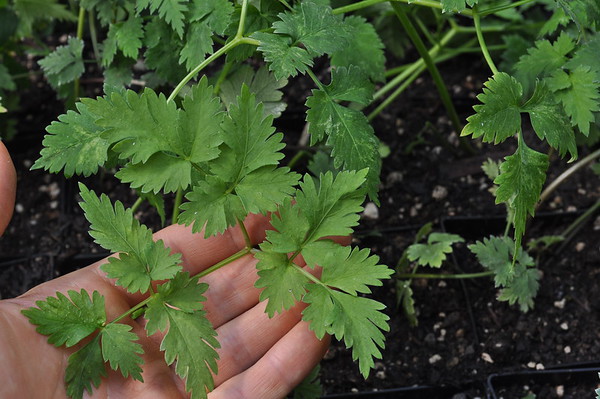
Also known as Bai Zhi in Traditional Chinese Medicine, this angelica species is native to northeastern Asia in Russia, China, Korea, Japan, and Taiwan. This is the first year we’ve grown it in our gardens, and so far, it seems to be quite similar to garden angelica (A. archangelica) in its habit and requirements.
Medicinally, it’s used as a warming and bitter carminative and digestive aid, decongestant, anti-inflammatory, and anti-fungal, which is again very similar to garden angelica. However, the root is also traditionally added to soups in a way that is similar to parsnip, and so I imagine it to be more palatable and less aromatic and pungent than garden angelica. We plan to find out! Read more
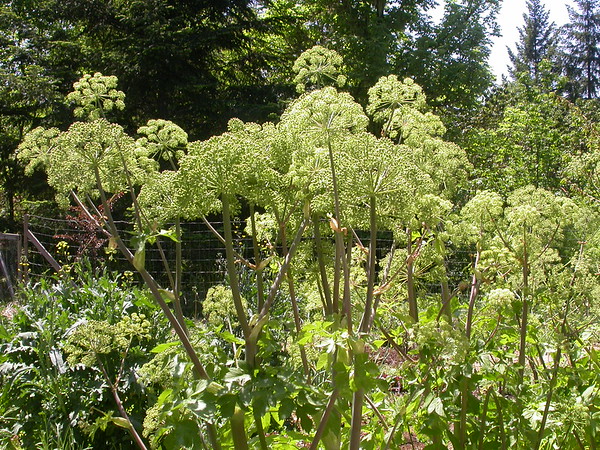
This is one of our favorite spring-producing plants. A biennial, Angelica shoots out of dormancy in winter and grows quickly to its full height, up to six or seven feet. In the parsley family, Angelica has a stunning display of white flower whorls in spring which are great for pollinators and beneficial insects. If you let some seed mature, you will always have Angelica in your garden, even after the flowering plant dies. It prefers garden soil, full sun and reasonable drainage. We harvest the young leaf stalks and boil them in honey to make a delicious and nutritious candy. We also steep the leaves, stems, and seeds in brandy and a little vegetable glycerine to make an excellent after-dinner digestive aid. Be cautious - this emmenagogue can be dangerous to use during pregnancy. Read more
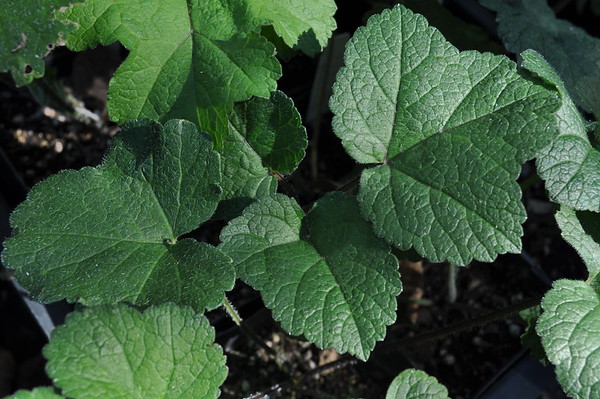
Also known as du huo in Traditional Chinese Medicine, and shishiudo in Japanese medicine, this angelica species is native to just the eastern part of Asia in those two countries. It has leaves and stems that are covered in long, rough transparent hairs. This is our first year growing it in our gardens and nursery, and so far it seems to be similar to garden angelica (A. archangelica) in its preference for rich, moist soil and mostly shade with some sun.
It is traditionally used to ease the difficulty of arthritis and any other rheumatism, as well as being a general warming and aromatic bitter. Read more